The biggest source of power a community has when data-center developers come knocking is the ability to say no. That power is manifested through zoning, building codes, environmental rules, and other hurdles. Everything downstream depends on it. It’s the difference between a project that, say, regularly floods its neighbors’ property with nasty construction runoff, and one that funds and improves its host community. Guess which happens when your county can only say yes.
We don’t have to guess: West Virginia stripped veto power from every community in the state when it passed HB 2014 earlier in 2025. The law, championed by MAGA Governor Patrick Morrisey, declares that only the state can say no to a data center. And, in what’s often pitched as the least regulated state in the nation, don’t count on it. West Virginia is in a heated race with itself to approve new hyperscale projects.
One of those projects is in Berkeley County, the second-largest county in the state and part of the far-outer ring of Washington, DC, suburbs. Its site in the very small town of Bedington happens to sit not far up the Potomac River from a larger, somewhat analogous project just outside of the city of Frederick, MD. In Maryland, local governments still have power over data center development, and the difference could mean hundreds of millions of dollars in windfalls and new tax revenue.
As planned, these are mammoth facilities and will easily consume their surroundings. The Maryland data center campus, known as Quantum Frederick, has a few years’ head start. It’s well under construction. In West Virginia, the Penzance Bedington Campus was certified as a High Impact Data Center only earlier this year by Governor Patrick Morrisey. The site is currently farms and pastureland.
The projects are linked in that they both serve as relief valves for nearby Loudoun County, VA, known for its sprawling Data Center Alley. Something like a quarter of all internet traffic passes through the county’s pipes, making it one of the largest chokepoints in the world. Data Center Alley’s 53 million square feet of computing, spread across 250 buildings, has made local power an increasingly scarce and expensive commodity. Virginia’s neighbors have been watching.
To see what HB 2014 is doing to red-state West Virginia, blue-state Maryland is a useful comparison. Turns out it’s not just about stripping local control of what gets built and where; WV is also strip-mining its communities for property tax revenue. While Frederick County is able to flex on Quantum Frederick’s developers, extracting money and project concessions, West Virginians just have to take it.
West Virginia: Penzance Bedington Campus
Ground has yet to be broken on the Penzance Bedington Campus. It doesn’t even appear to have a proper name yet, and is so far unmentioned on the website of Penzance Management, the Washington, DC, developer behind the project. No tenant has been announced that will actually use the new computing capacity.
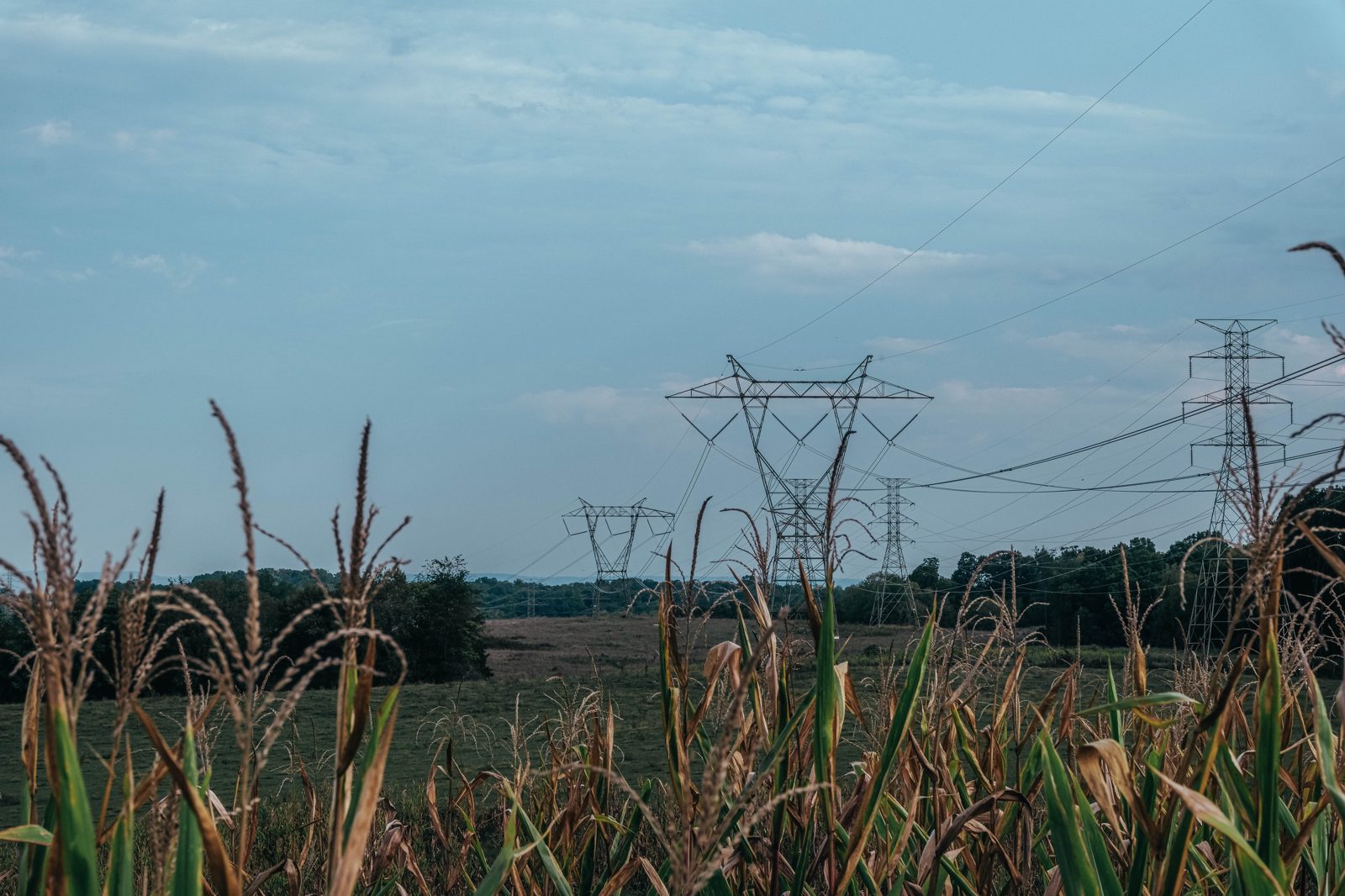
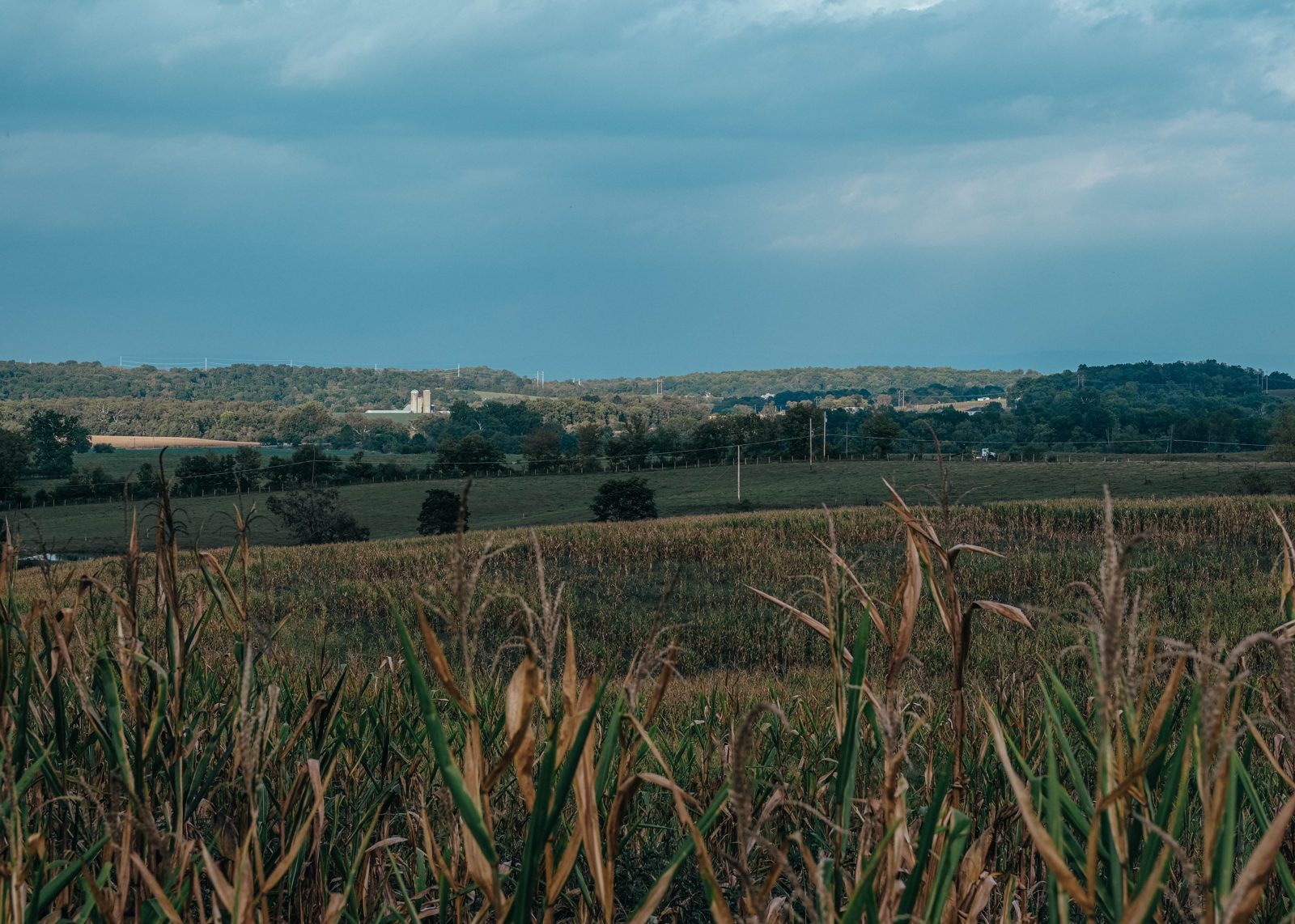
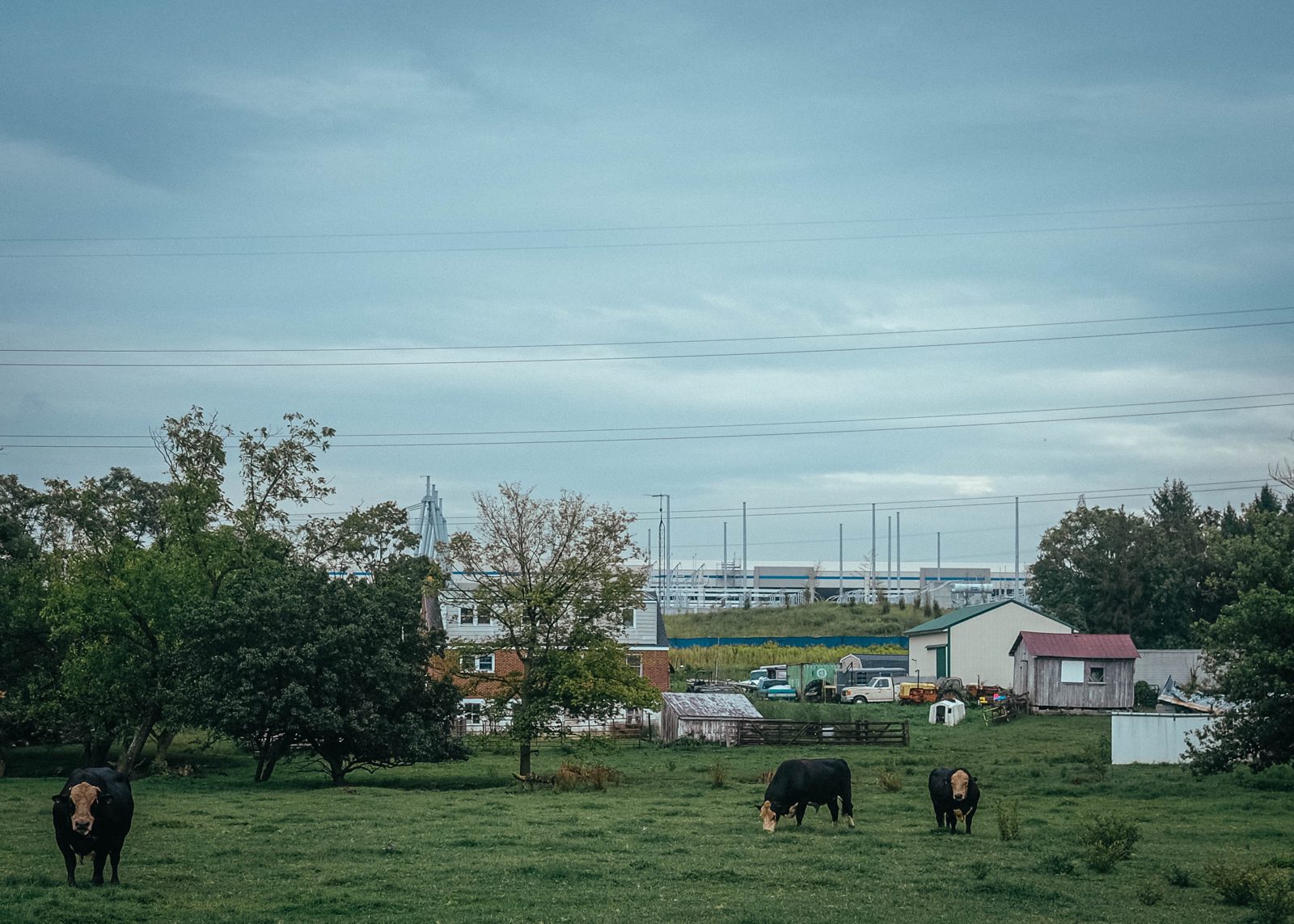
On a recent hazy morning, no sign of the project could be found at the 548-acre Bedington site. Not a survey flag to be seen. A US Army recruiting banner hung limply against a fence. Lazy Daizy’s Farm Market, just a tent on the front lawn of its host farm, had yet to open for the day. The only things to break up the surrounding pastureland were high-voltage transmission towers marching across the low hills.
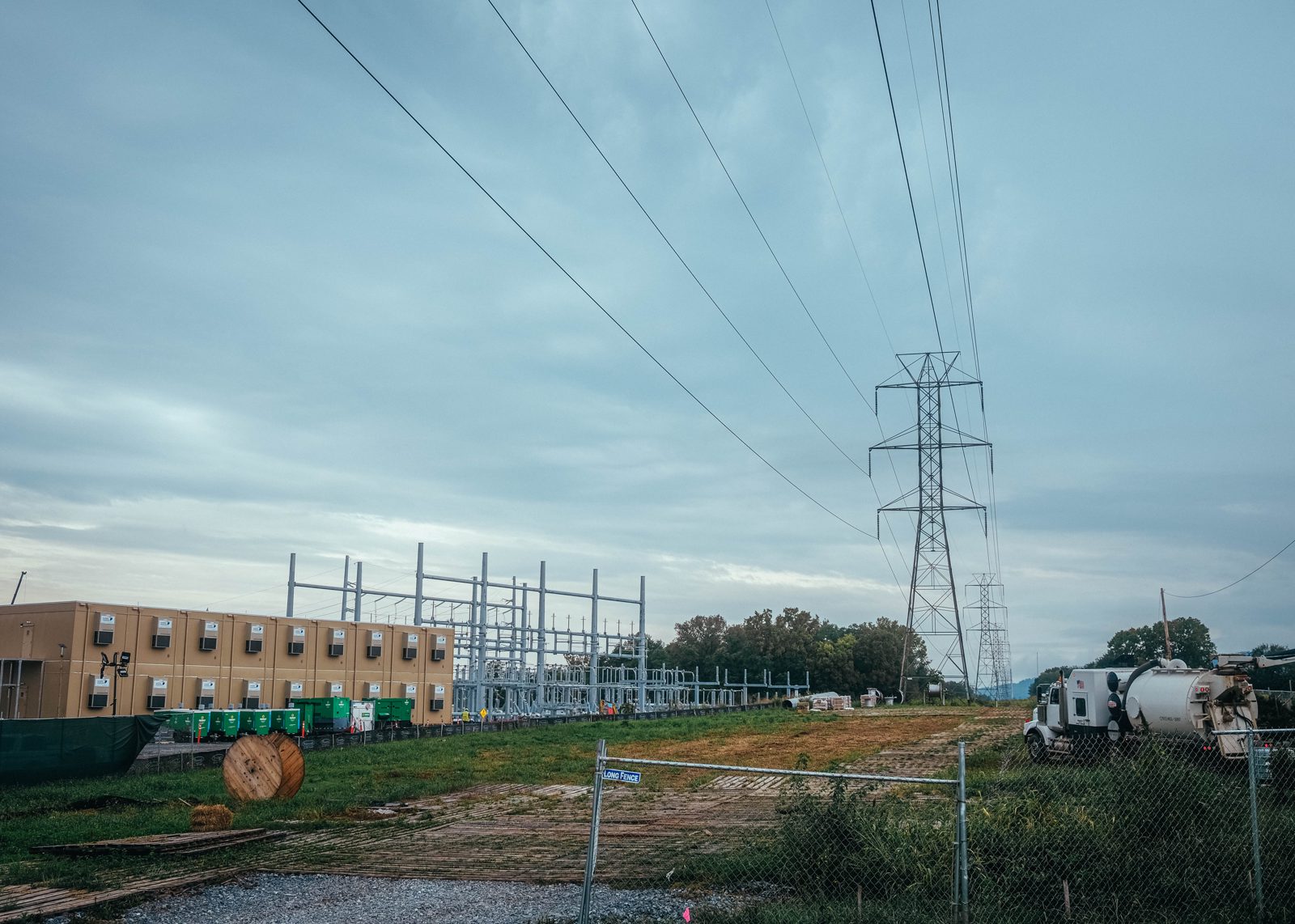
These towers run out of the largest electrical substation in the state of West Virginia. This is what makes this prime data-center real estate and what will supply the roughly 750 megawatts required by the Penzance project (600 MW output capacity at 1.25 PUE, for those counting). At a recent Lunch and Learn, Penzance’s John Kusturiss assured local leaders “this project doesn’t cause rates to go up because capacity is already there,” according to the Wheeling, WV, Intelligencer.
Penzance plans to deploy a total investment of $10 billion into the Bedington site, breaking down to $4 billion for real property infrastructure (land and concrete) and another $6 billion for tangible personal property (servers). A recent West Virginia Treasury analysis estimates the project will generate roughly $62.4 million in total property tax revenue. However, thanks to HB 2014, the regular levy portion of this new revenue—amounting to less than $34.1 million—will be rerouted through a centralized state distribution formula.
HB 2014, which strips local fiscal autonomy over high-impact data center developments, allows the state to skim millions for statewide programs and a personal income tax reduction fund before divvying a capped 30 percent portion back to the Berkeley County Commission. It’s a top-down model that looks a bit like a state-level shakedown, leaving the local county dependent on its own voter-approved school levies to keep the remaining $28.3 million within county lines.
Typically two-thirds of any personal income tax reduction goes to the wealthiest in the state
“[I]nstead of going into the general revenue fund that could still make its way to public services that benefit all residents, the property taxes seized will go to a myriad of state special interests, the largest of which is the Income Tax Reduction Fund, where typically two-thirds of any personal income tax reduction goes to the wealthiest in the state,” writes Sean O’Leary of the WV Center on Budget and Policy.
The counterargument here is pretty simple: hey, free money. Be grateful for anything at all. And Berkeley County Commission President Eddie Gochenour certainly is, offering the following in a statement from the Governor’s office: “The annual revenue generated by this project will further cement Berkeley County’s reputation as the premier destination to live and work in the Mountain State. I am grateful for Governor Morrisey’s leadership in championing this type of investment.”
There’s a big trap in that free money calculation, however. Counties in West Virginia get state money for their school systems, and how much that winds up being per pupil has to do with the total assessed value of property in each respective county. Basically, the formula goes Hey cool, your county has an immense new industrial property tax base, you must be really rich from collecting taxes on those data center buildings. The state subtracts that assumed wealth from what it would have paid out in state aid for schools. It’s means testing, in other words.
The problem is that Berkeley County’s formula-guaranteed cut is just 30 percent—the state claims the rest by default for statewide programs like income tax reduction and propping up coal power plants. The only reason the county’s actual take climbs closer to two-thirds is its own voter-approved school levies, layered on top of that baseline. But even that better-than-average outcome comes with a catch: because lawmakers forgot to write a data center carve-out into the state’s school aid formula, the county stands to lose over $6 million in state school funding for every $1 billion in data center real property value. At full build-out, that could mean a $30 million hit to Berkeley County Schools—clawing back a big chunk of the very revenue those local levies were supposed to protect. It’s pretty grim. So far, the state has been unable to offer a resolution.
In a radio interview earlier this year, Gochenour admitted to having signed an NDA with the Penzance project. He also noted that a mere three days elapsed between the County Commission learning about the project and the Governor announcing it. It would appear that state planning and decision-making happened completely behind the county’s back. In a March town hall, his fellow Commissioner John Hardy only emphasized the point: “There are going to be a lot of questions that you all will ask us tonight that we are not going to have an answer for, so we will be taking those questions and going to the governor’s office and the developer to get answers.”
Curiously, Gochenour was in a (slightly) less groveling mood in a state Senate committee hearing in 2025, when he testified in opposition to HB 2014. “When the governor was the former Attorney General, he fought back against over regulating from the federal government and on the local level,” he said then, according to WV Public Broadcasting. “We feel we’re doing the same thing.”
Last weekend, a group called No Data Centers in the Eastern Panhandle held a town hall in Martinsburg, the Berkeley County seat. Neither Gochenour nor Hardy was in attendance. HB 2014 was the refrain; the vibe was hopeful but mostly exasperated. Residents’ worst HB 2014 fears were coming true: The state was going to run right over its communities in a race to become not Loudoun County, but a soot-coated impoverished version of it. Loudoun County if it were a vassal state.
Elizabeth Ferris, a local State Senate candidate, told a useful anecdote from her time working for Walmart. The chain has an algorithm of sorts, she explained, that determines how nice a new store is going to be, whether it has setbacks and landscaping and nice architecture. A store might even sell local goods. The algorithm is based on a bunch of factors in the target community that add up to, essentially, how likely a county commission or board of supervisors is to approve the store. If the algorithm says a planned store is a 5, that’s the nice store. The county commission is likely to say no, so Walmart has to try harder.
If a store is a 1? That’s the Walmart special. The giant grey cube surrounded by asphalt. “What we’ve essentially done with House Bill 2014? We’ve made every county a zero,” Ferris said.
Maryland: Quantum Frederick

Quantum Frederick is around four times the scale of its West Virginia counterpart. The campus will be occupied by three distinct tenants, including a notable Amazon Web Services expansion (a new Maryland availability region). In all, the project will output around 2.4 GW of power and occupy 2,100 acres of land on a former aluminum smelter site. Construction has been underway since Quantum Loophole, the original and since-replaced developer of the site, first broke ground in 2022.
A key feature of the campus is what’s known as the QLoop, a fiber-optic ring connecting Quantum Frederick with data centers in Virginia. This will enable 0.5 millisecond connection speeds, which, in practical terms, means the new campus might as well be planted in Ashburn, VA, with the rest of Data Center Alley.
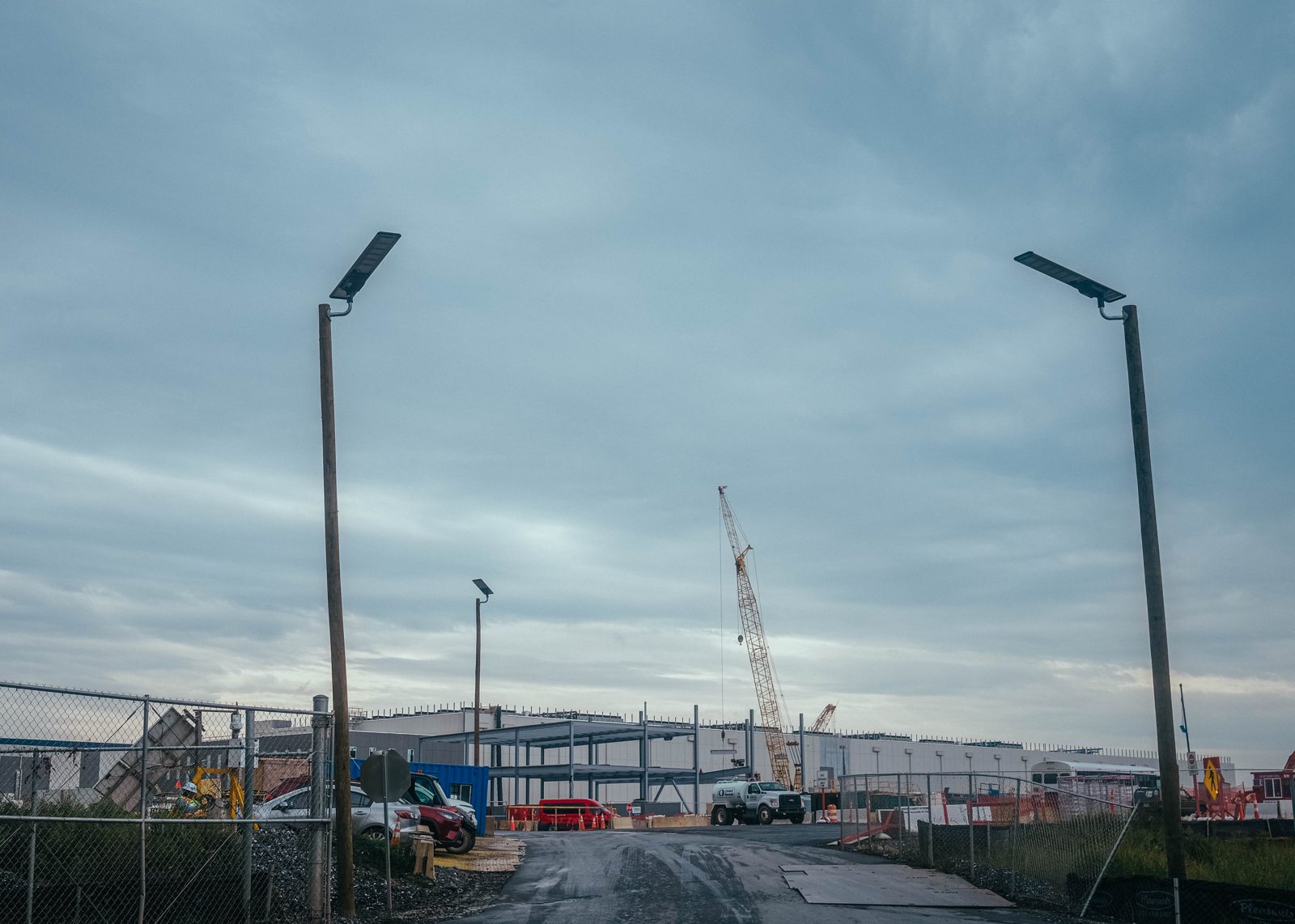
While the Penzance site remains in a kind of bucolic suspension, a calm before the storm, Quantum Frederick is a dirt-caked zoo of employee shuttle buses, equipment trucks, and high-viz vests. Project proponents are quick to point out that this used to be the scene of heavy industry, and would otherwise be a brownfield (they have a point). But it’s also ringed by pasture and cornfields. A few miles to the north, this relative countryside gives way to the tract housing of the Frederick suburbs.
When it comes to who is allowed to build what where, it’s usually a question for local governments: counties, towns, cities, etc. Unlike West Virginia, Maryland is no exception and that includes data centers, like Quantum Frederick. Six Maryland counties have implemented data center moratoriums or effective moratoriums, including Baltimore City. Frederick County has a pause on new data center development as of July. It was just extended to next summer.
Like West Virginia, Maryland captures vast amounts of data center money for itself. This happens through utility franchise fees and corporate income tax, all of which go directly to Annapolis. The tradeoff here is that, unlike West Virginia’s top-down seizure of local tax levies, counties in Maryland maintain total sovereignty over local land use. This means Frederick County can use its zoning and regulatory power to legally box developers into agreements that extract an alternate share of data center cash—trading land approvals for millions in direct community benefits.
In all, Frederick County is estimated to get around $40 million per year in regular concrete-and-land property taxes, which is about what Berkeley County can expect to receive back from the state of West Virginia. That’s fine—it’s real money—but the real prize is in taxing the servers. That’s where most of the data center investment goes (and goes again and again as servers burn out every three years). Maryland, however, has a sales tax ban for high-tech equipment. It’s the only way to stay competitive with Virginia, or so the argument goes. (West Virginia doesn’t have a ban, exactly, but it does severely reduce the taxable value of high-tech gear.)
Frederick County could enact a local personal property tax that would hit server equipment, but a framework for this doesn’t currently exist. So the tax is zero. That’s intentional, a means of attracting new businesses, particularly biotech. The county has been fairly successful in that. Now, Frederick County is looking up at a Mount Everest of expensive computing equipment and it’s wondering how to get a cut.
The issue is that if Frederick County enacted a personal property tax, it would hit every category of business. It doesn’t want that. Again: biotech. So, the county is currently working with the state to pass a new law that would allow for specific targeting of “all personal property of a qualified data center.” At the moment, this takes the form of Senate Bill 427, which has yet to pass. Interestingly, the current developer of Quantum Frederick, Catellus Development Corporation, had been backing the effort.
That backing was part of a set of rules that had been negotiated by the county with Catellus, known as a Developer Rights and Responsibilities Agreement (DRRA). The main component of this was a $110 million windfall payment to Frederick County for a set of specific projects: community center, school improvements, firetruck, park, etc. In exchange, Catellus would get a total regulatory freeze in the county, for at least eight years. No downzoning, new regulations, etc. In effect, the county was trading away its biggest source of leverage, the ability to say “no,” for a single payday.
Earlier this week, Frederick County Executive Jessica Fitzwater formally rejected the DRRA. Fitzwater happens to be up for reelection this year, and the DRRA was proving to be extremely unpopular. “The proposal would have met critical needs in Adamstown and made the Frederick Digital Campus more sustainable, but the cost of those benefits would have been too great for our community,” she wrote in a letter to Catellus executive Michael Kuykendall. “The data center industry is rapidly changing, and the provisions that would have shielded the development from all future local laws are unacceptable.”
It’s quite a turnabout from two weeks ago, when Fitzwater called the DRRA “good, responsive government.” Part of what got the County Executive into trouble was cynically pitching the DRRA to the public as a community benefit agreement (CBA), which it was not. A CBA is typically a deal made between local coalitions of citizen groups and a developer in which the developer makes concessions in exchange for broad community support. A DRRA is a binding contract specified by Maryland state law between a local government and a developer that vests development rights. Its core purpose is to freeze local power, in much the same way that HB 2014 limits communities in West Virginia, only self-inflicted. The $110 million was a legally required sweetener, a “consideration” in legal terms.
Work will continue on the Quantum Frederick campus. The three tenants currently laying fiber and pouring concrete are grandfathered in, but further phases of the data center city will require the county to lift its pause. And those further phases represent the vast majority of the project—roughly another 1,500 acres beyond the 500 currently under permit.
Harford County, a generally Republican county in northern Maryland, just passed an outright, permanent ban on data centers across every zoning category. It is the strongest restriction in the state. As the public mood around data centers sinks in Frederick County, it’s worth noting that there is another aspect to having the ability to say no:
Sometimes you actually do.
nothing yet.
reply on bluesky